4. The link between data quality and company valuation why poor data governance reduces business worth
Poor data governance does not just create operational pain. It directly reduces what a business is worth in the eyes of investors and acquirers. This post examines how data quality flows through to enterprise value.
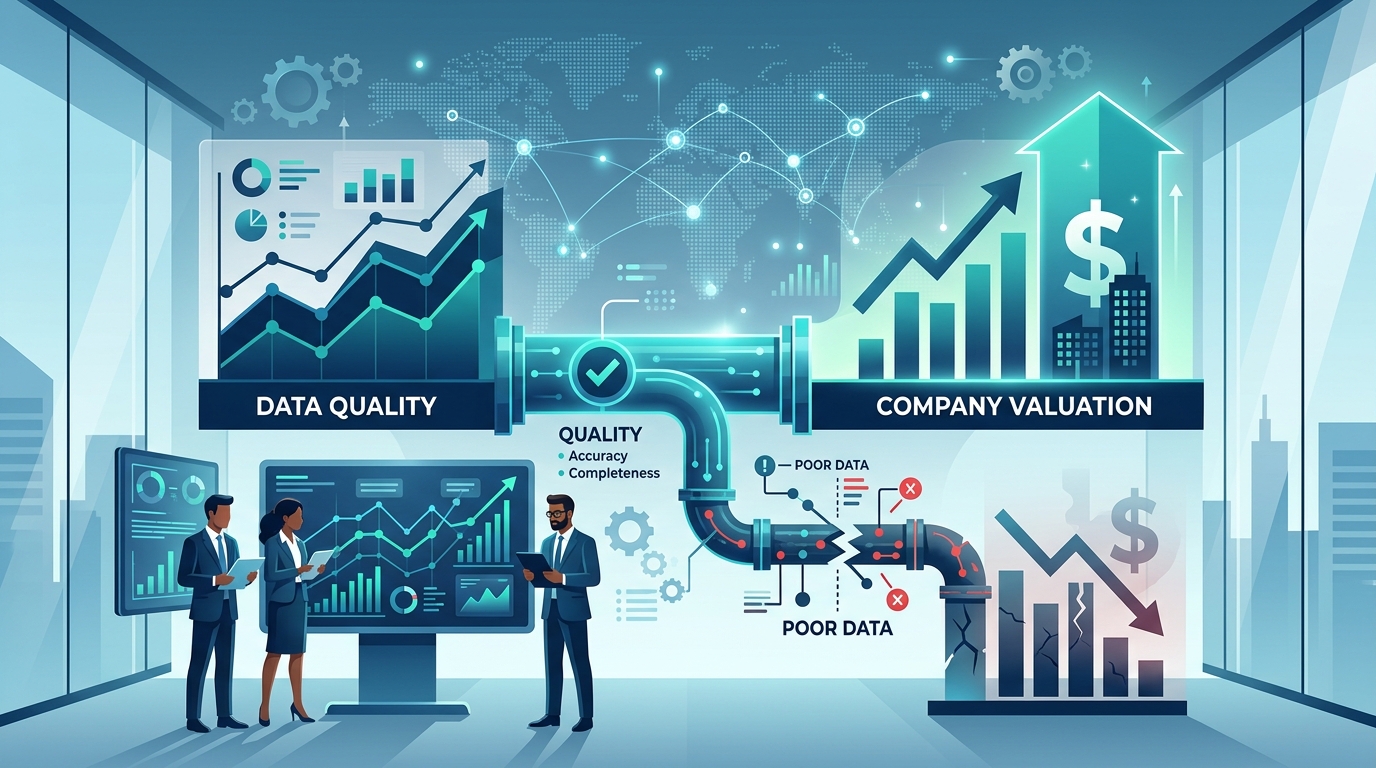
When investors or buyers assess a company's worth, they traditionally focus on tangible assets, revenue streams, and market position. Yet an increasingly critical factor often goes unexamined: the quality of the data that drives decision-making across the business. Poor data governance doesn't just create operational headaches; it actively diminishes company valuation by introducing risk, undermining trust, and limiting strategic options. Understanding this connection is essential for any business leader who wants to protect and enhance their organisation's financial standing.
Data quality issues manifest in ways that directly impact the bottom line. Inaccurate customer records lead to missed sales opportunities and inefficient marketing spend. Inconsistent financial data creates compliance risks and audit complications that can delay transactions or trigger regulatory penalties. Duplicate entries and outdated information waste staff time and introduce errors into forecasting models. When due diligence reveals these problems during an acquisition or funding round, buyers discount their offers or walk away entirely. The message is clear: companies with messy data are riskier investments, and that risk is reflected in lower valuations.
Beyond the immediate operational costs, weak data governance signals broader management shortcomings. It suggests a lack of systematic oversight, unclear accountability, and an inability to leverage one of the company's most valuable assets. In contrast, businesses that demonstrate strong data management practices signal competence and readiness for growth. They can confidently share data-driven insights with stakeholders, prove the reliability of their metrics, and demonstrate how their information assets contribute to competitive advantage. This transparency builds confidence among investors and partners, directly supporting higher valuations.
The connection between data quality and company worth will only intensify as organisations become more data-dependent. Artificial intelligence and machine learning amplify both the value of good data and the cost of bad data, making governance practices a strategic differentiator. Companies that invest in data quality now are not just avoiding problems; they are actively building an asset that enhances their market position. For boards and executive teams, the question is no longer whether data governance matters for valuation, but how quickly they can address gaps before they become liabilities that erode business worth.